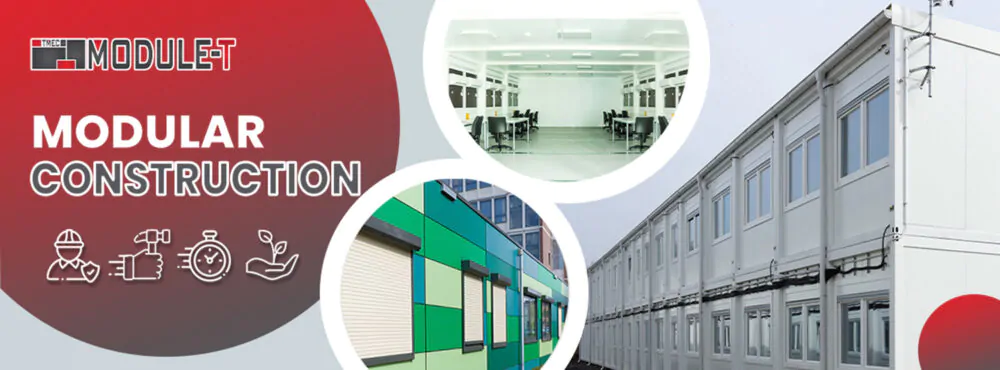

Module-T manufactures prefabricated office buildings for administrative teams, industrial facilities and project-based operations. Each workspace is planned around the required floor area, room functions and destination conditions rather than a fixed standard layout.
The building system uses pre-cut panel widths of 625 mm, 1,250 mm or 2,500 mm. Its main load-bearing structure consists of highly galvanized lightweight steel prepared at the factory before delivery.
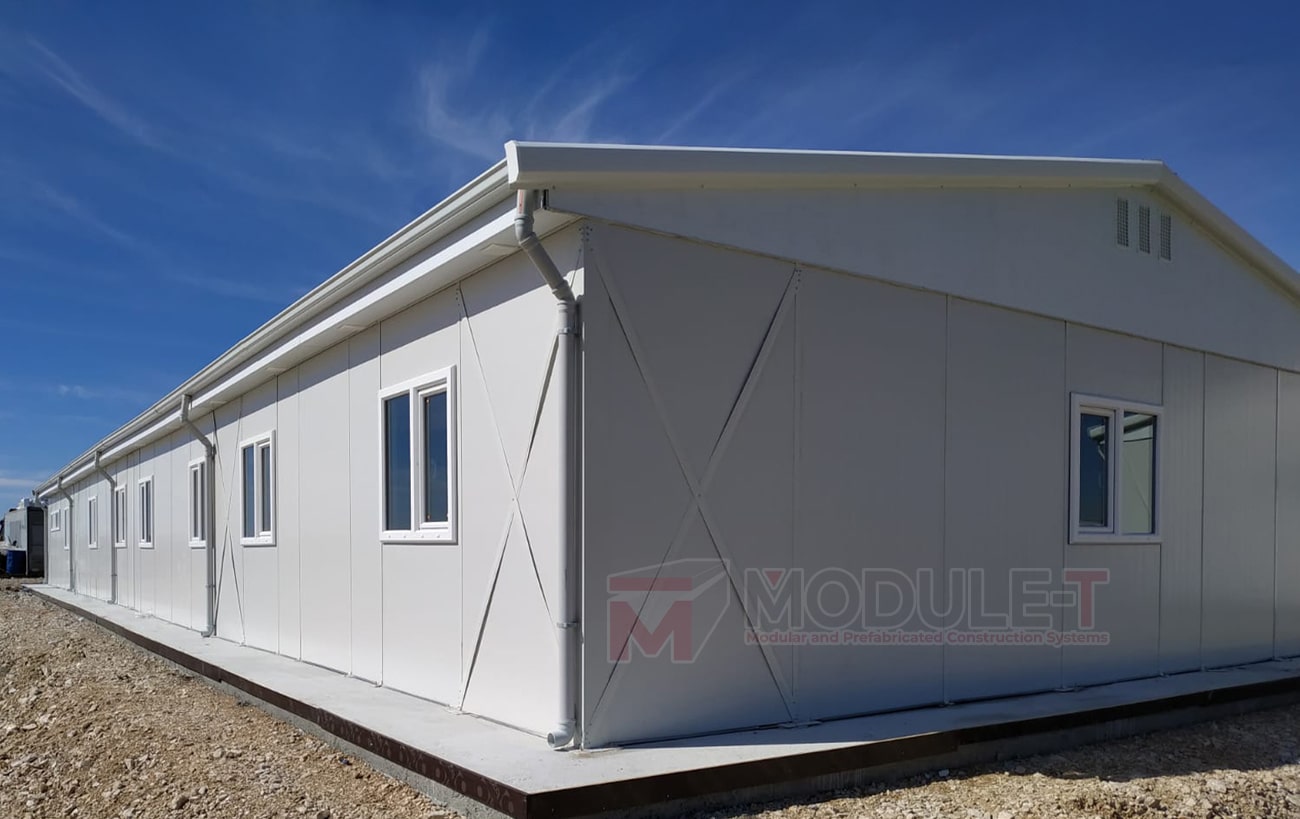
Internal and external walls use insulated sandwich panels with galvanized, pre-painted surfaces. Office projects may use 60 mm or 100 mm wall panels, while alternative thicknesses are assessed according to the wider technical scope. The final specification is confirmed during engineering.
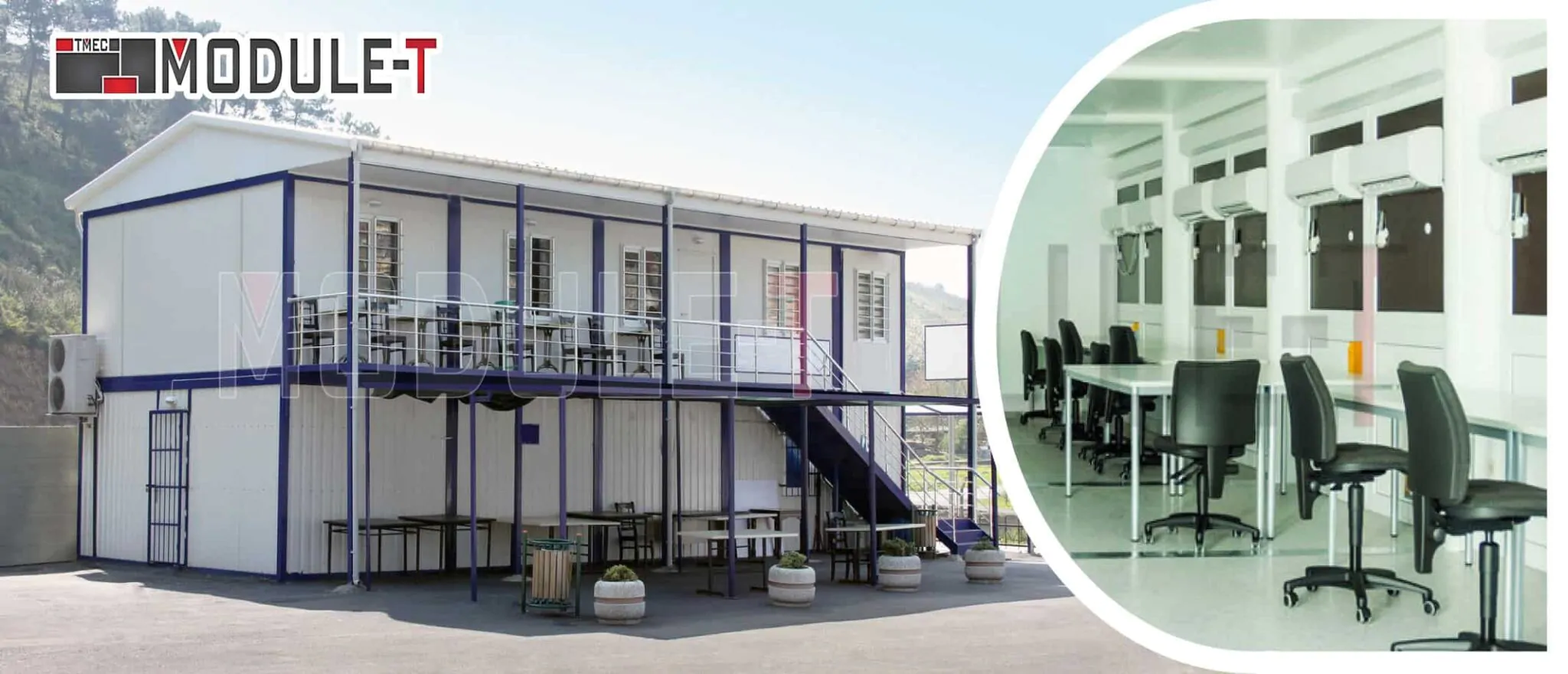
The building can accommodate open-plan workspaces, private offices, meeting rooms, administrative departments and staff facilities within a coordinated floor plan.
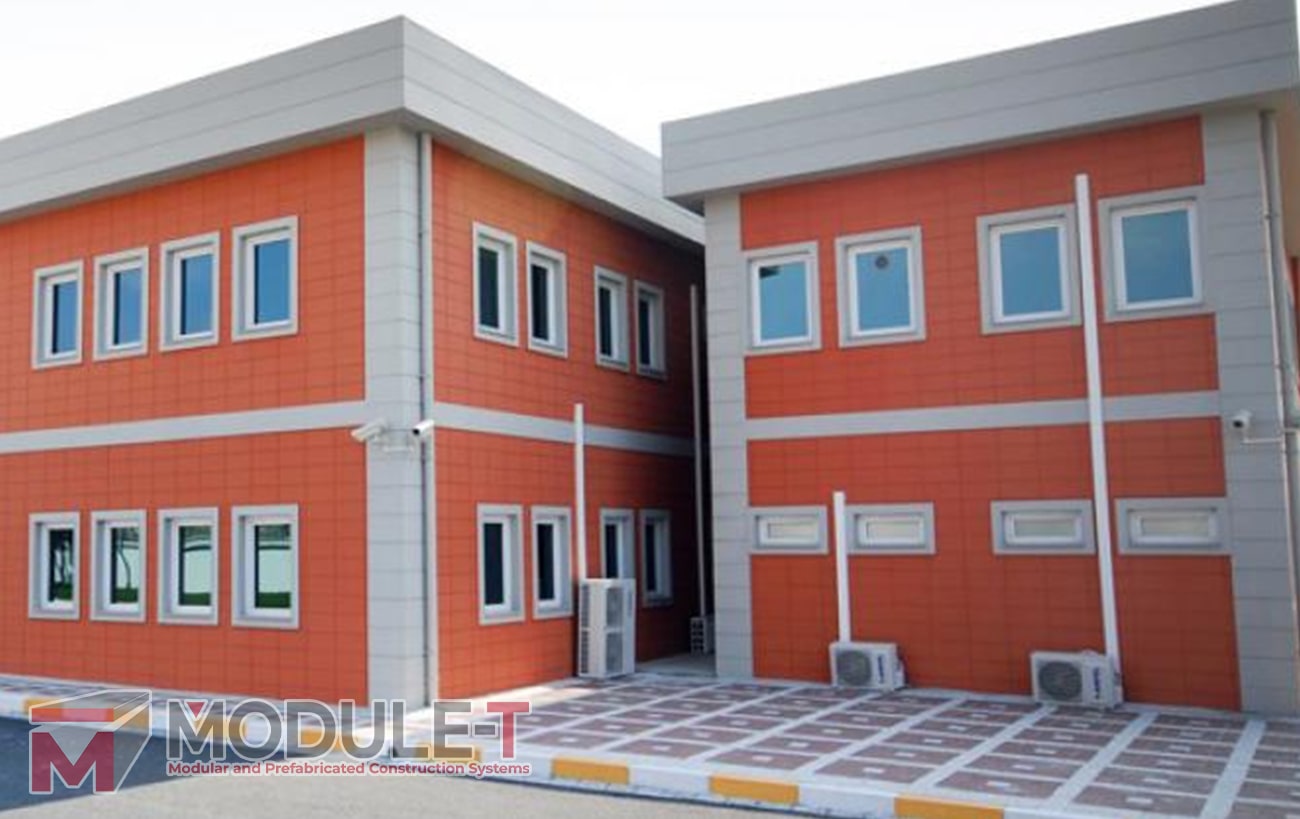
Clients can select the internal layout, floor coverings, doors, windows and exterior cladding according to the approved design. Room sizes and circulation areas are planned around employee capacity and daily workflow.
Before production starts, the structural design is reviewed against the seismic, wind and climatic requirements provided for the destination. These conditions guide the steel structure, connection details and building envelope.
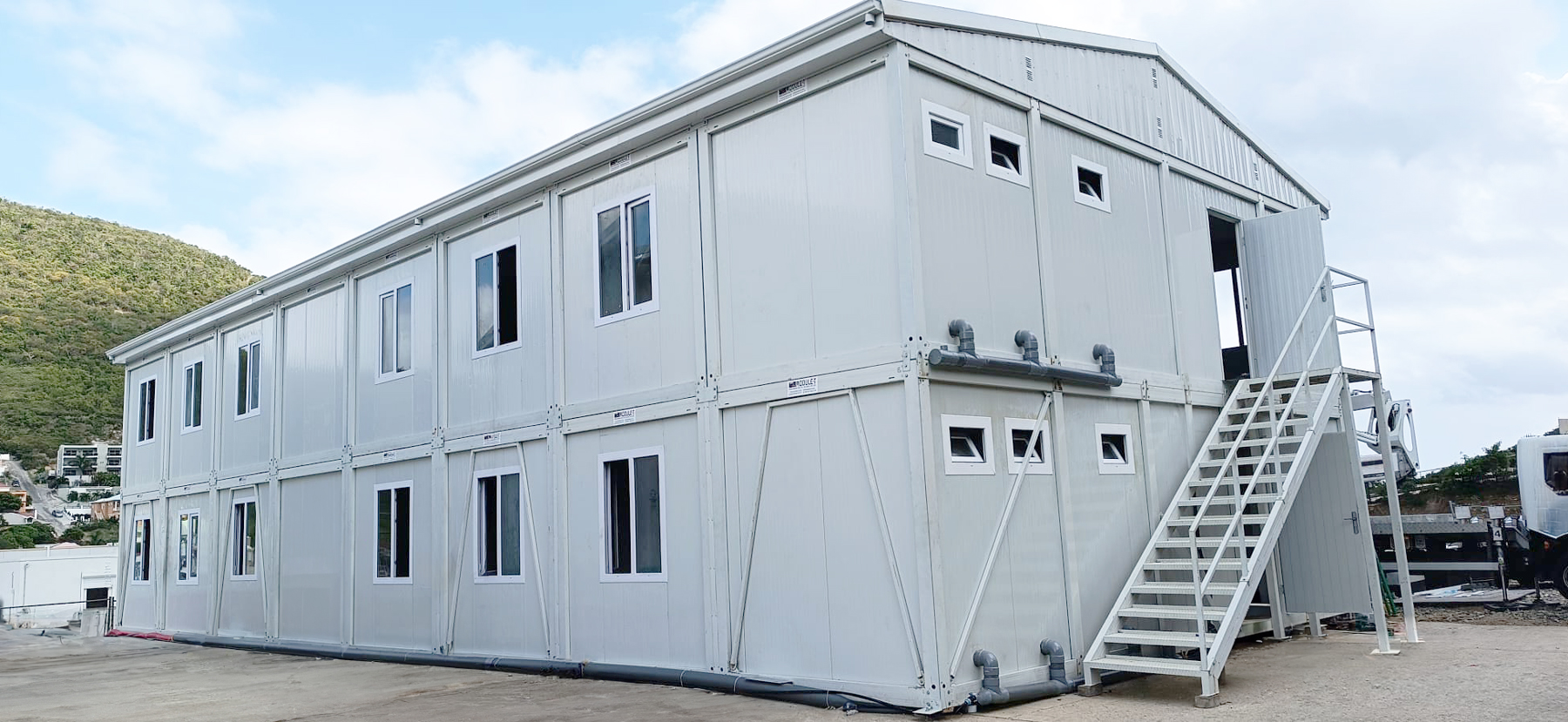
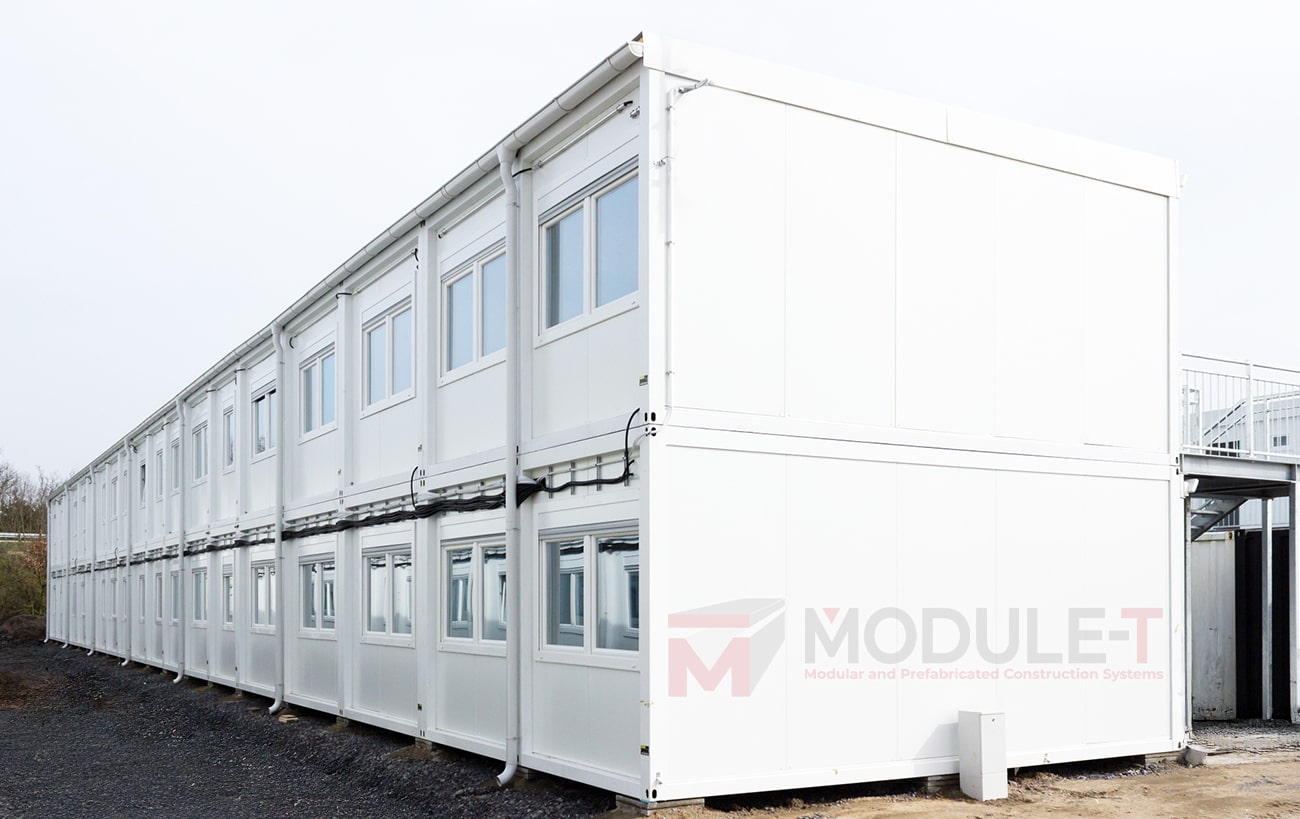
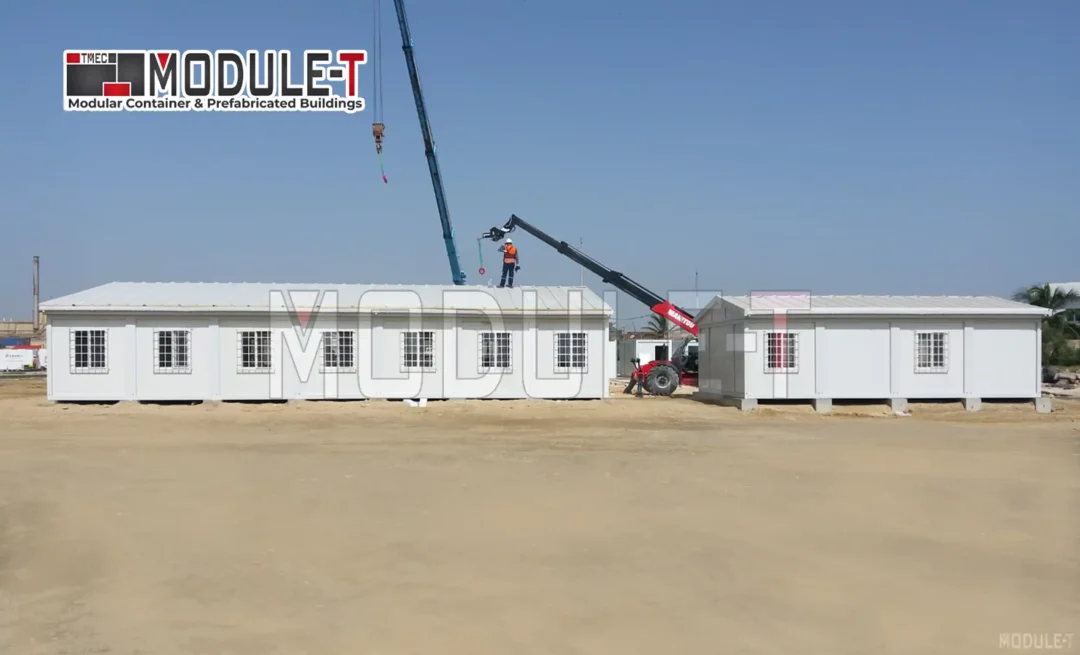
A prefabricated office building is assembled at the destination from structural and architectural components manufactured in advance. The steel frame, insulated wall panels, roof elements and connection points are prepared according to an approved design before shipment.
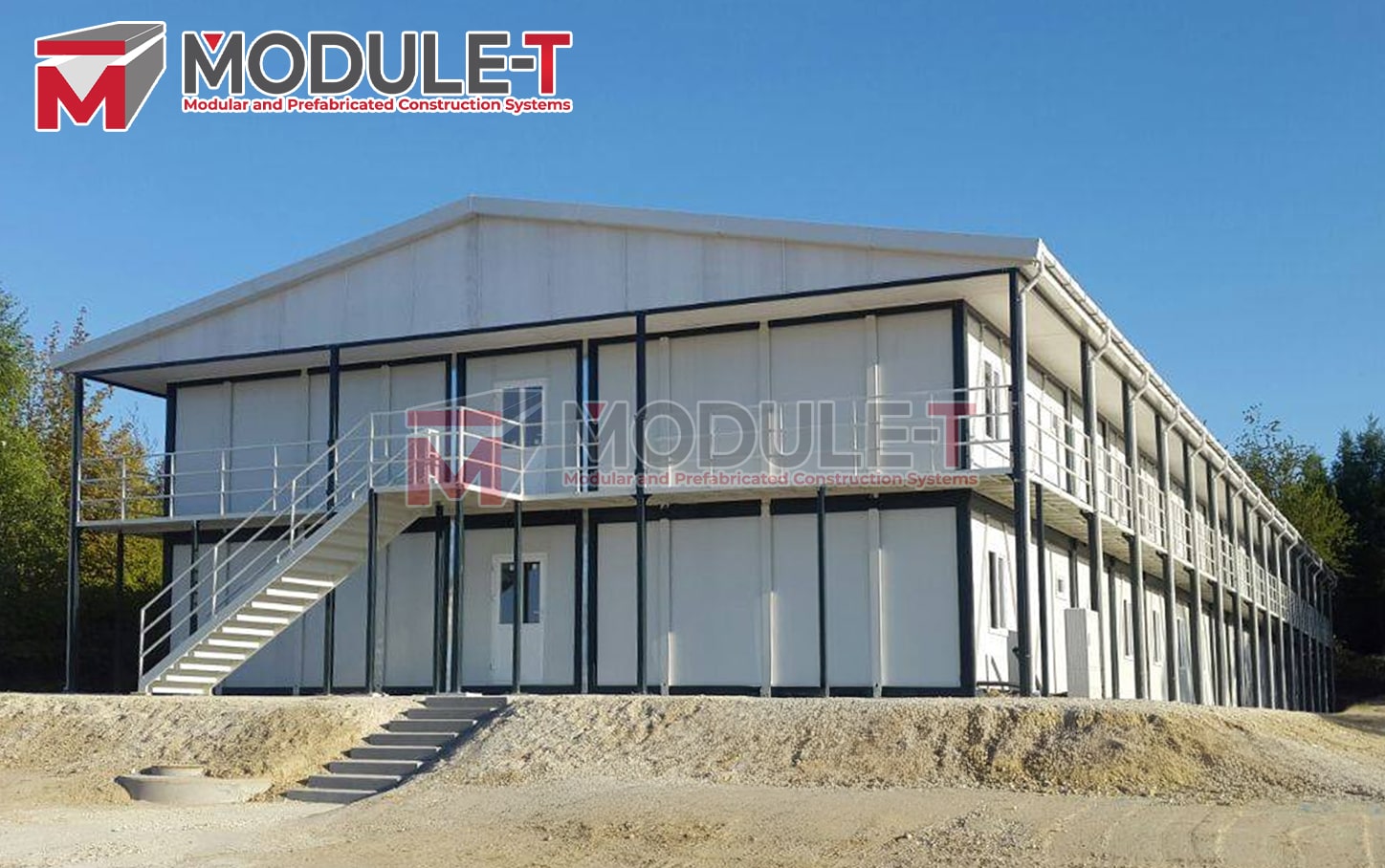
Unlike a workspace based on standard transportable units, the system supports a project-specific building footprint. The internal plan can combine management offices, meeting rooms, reception areas, shared workspaces, corridors and sanitary facilities.
This approach is suitable for companies seeking a purpose-designed administrative facility or a larger office building. Requirements based mainly on repeatable and transportable units should instead be evaluated through Module-T’s modular office buildings.
The appropriate building format depends on the available site area, employee capacity and functions required within the facility.
Common project types include:
A compact structure may accommodate project managers and a small administrative team. Larger layouts can provide separate departments, reception areas, meeting rooms and shared facilities across one or more floors.
Building dimensions and internal divisions are determined during the design stage. The plan is not restricted to fixed module dimensions or a predefined office arrangement.
The construction system combines a highly galvanized lightweight steel frame with insulated wall panels and factory-prepared connection details.
Main technical features include:
Preparing the main components at the factory supports dimensional consistency and reduces cutting, painting and structural preparation at the project location.
Wall thickness, roof insulation and opening specifications are selected according to climate, occupancy and required thermal performance. Final technical values are recorded in the approved documents before production.
Preparing the steel frame, wall panels and connection elements in a controlled production facility provides greater control over dimensions, materials and site assembly.
Components arrive ready to be connected according to the supplied plans. This reduces extensive on-site fabrication and limits disruption at active factories, industrial sites and construction areas.
Clients can also define the internal arrangement before manufacturing begins. Main benefits include:
Production and installation schedules depend on the building area, number of floors, technical requirements, destination and agreed responsibilities.
Module-T develops each office facility from the information supplied by the buyer. The initial brief should explain how the space will be used, how many people it will accommodate and which rooms are required.
The planning stage can cover:
The proposal defines the recommended construction system and the items included within the commercial scope.
Module-T provides prefabricated office buildings for sale through a project-based process rather than a fixed catalogue package. This allows procurement and technical teams to assess the proposed layout, specification and responsibilities before placing an order.
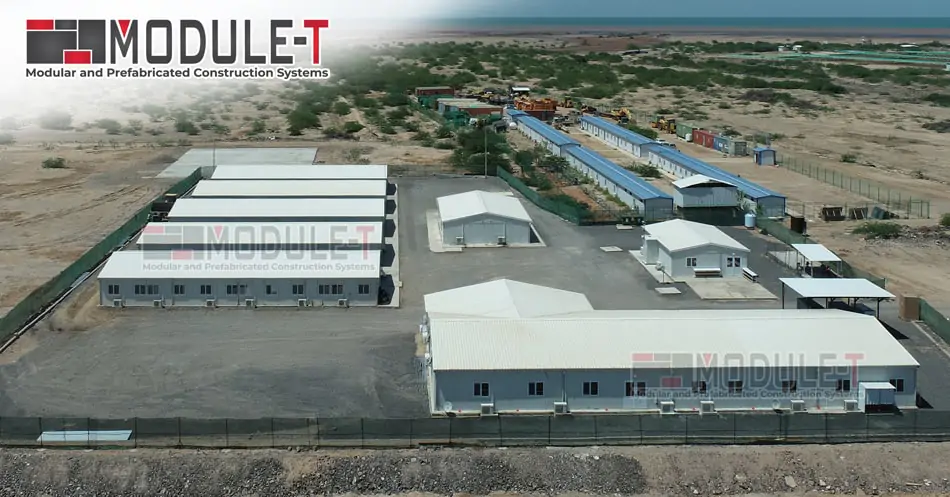
Prefab office buildings are used where administrative teams need to work close to an active project, production facility or operational site.
Common applications include:
At construction and infrastructure sites, a single building can accommodate managers, engineers and administrative personnel. Industrial companies may place office facilities close to production, maintenance or storage areas.
The layout should reflect the expected number of users, daily workflow, intended usage period and technical services required inside the building.
Prefabricated construction allows the main building components to be prepared while the destination site is being organized. Once the design is approved, the steel frame, panels and connection elements are manufactured according to defined measurements.
Practical advantages include the following:
Site access, unloading space, local ground conditions and assembly responsibilities should be clarified before production. These factors influence transport planning and the installation process, but no specific foundation type should be assumed until the project is reviewed.
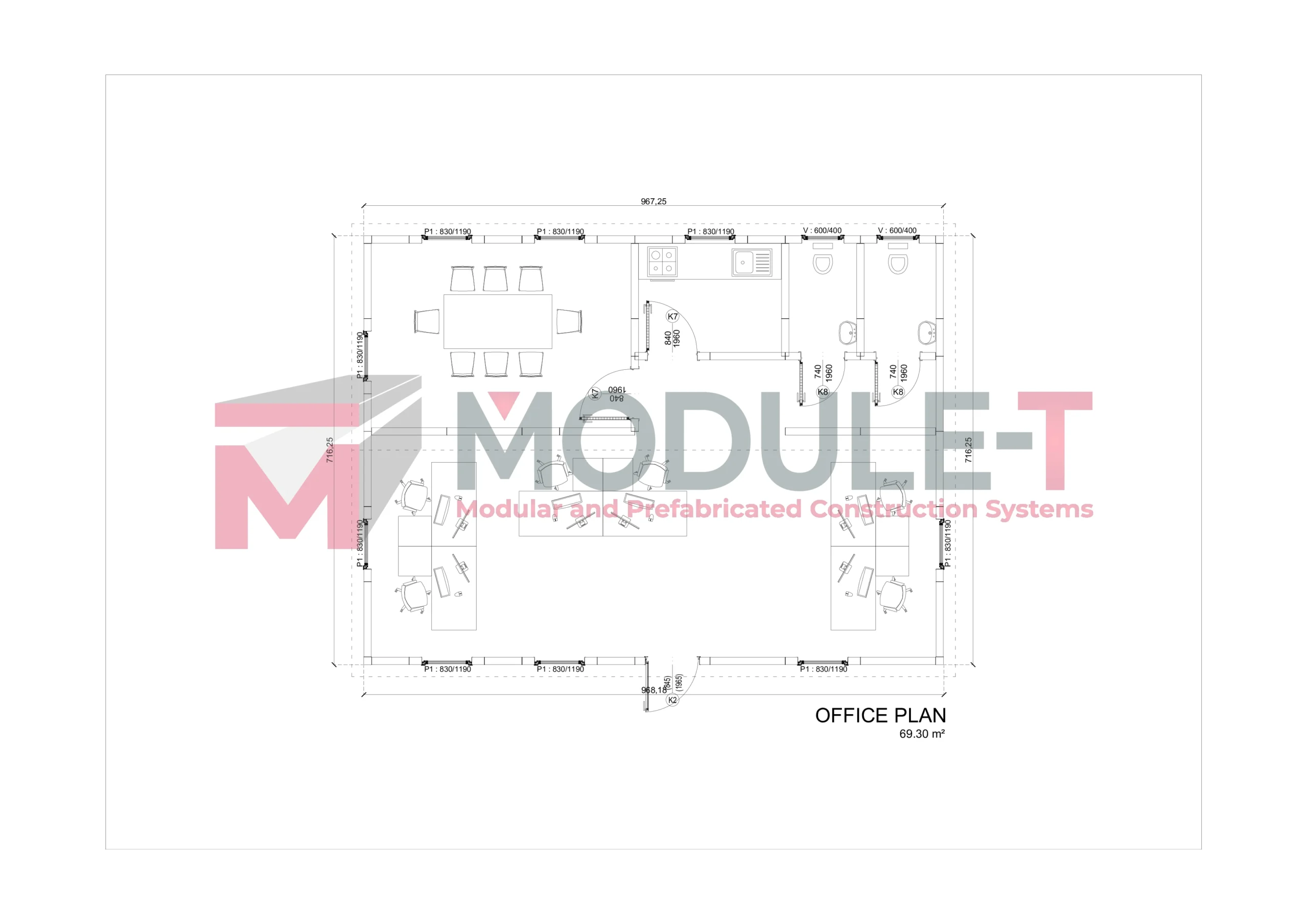
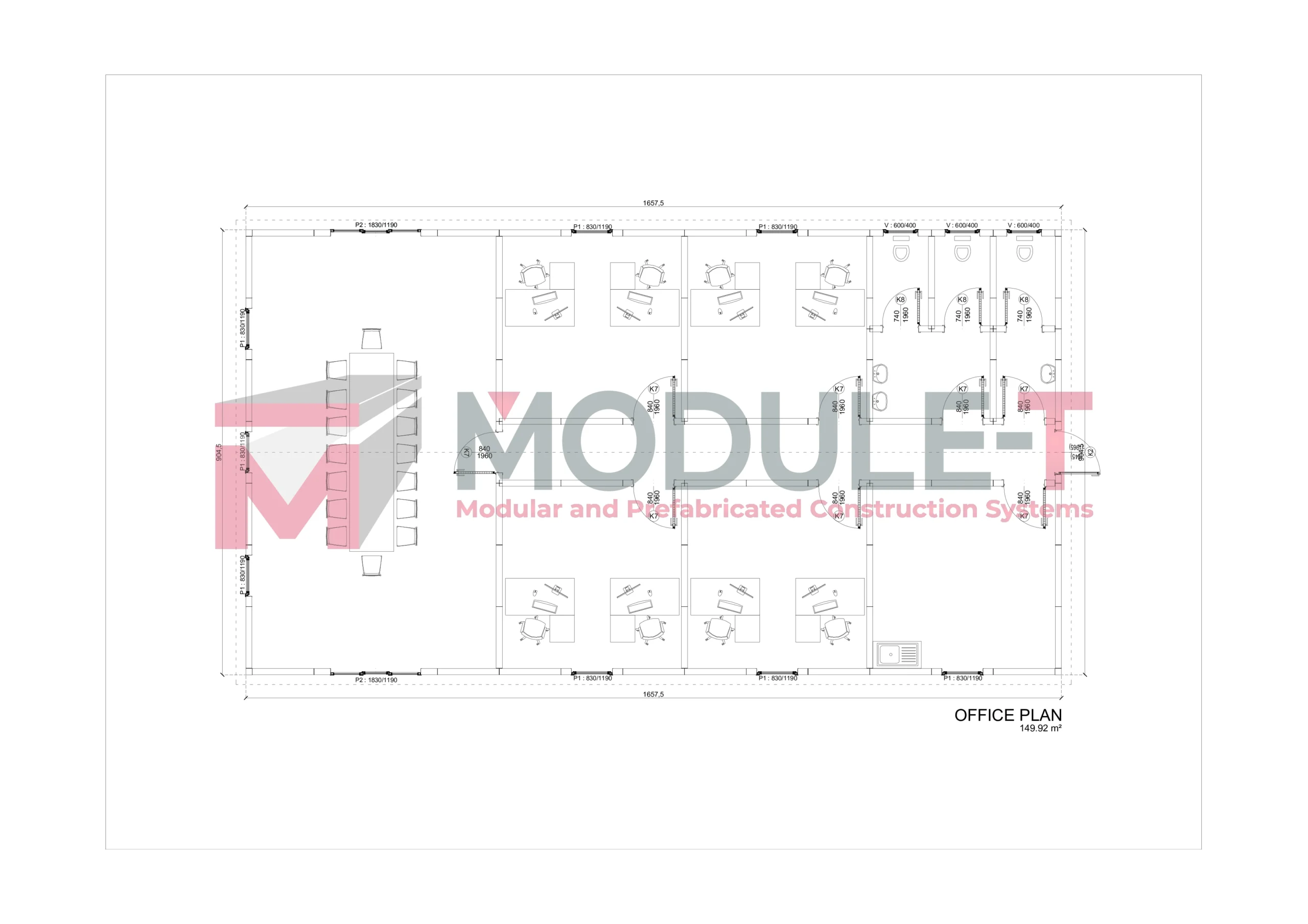
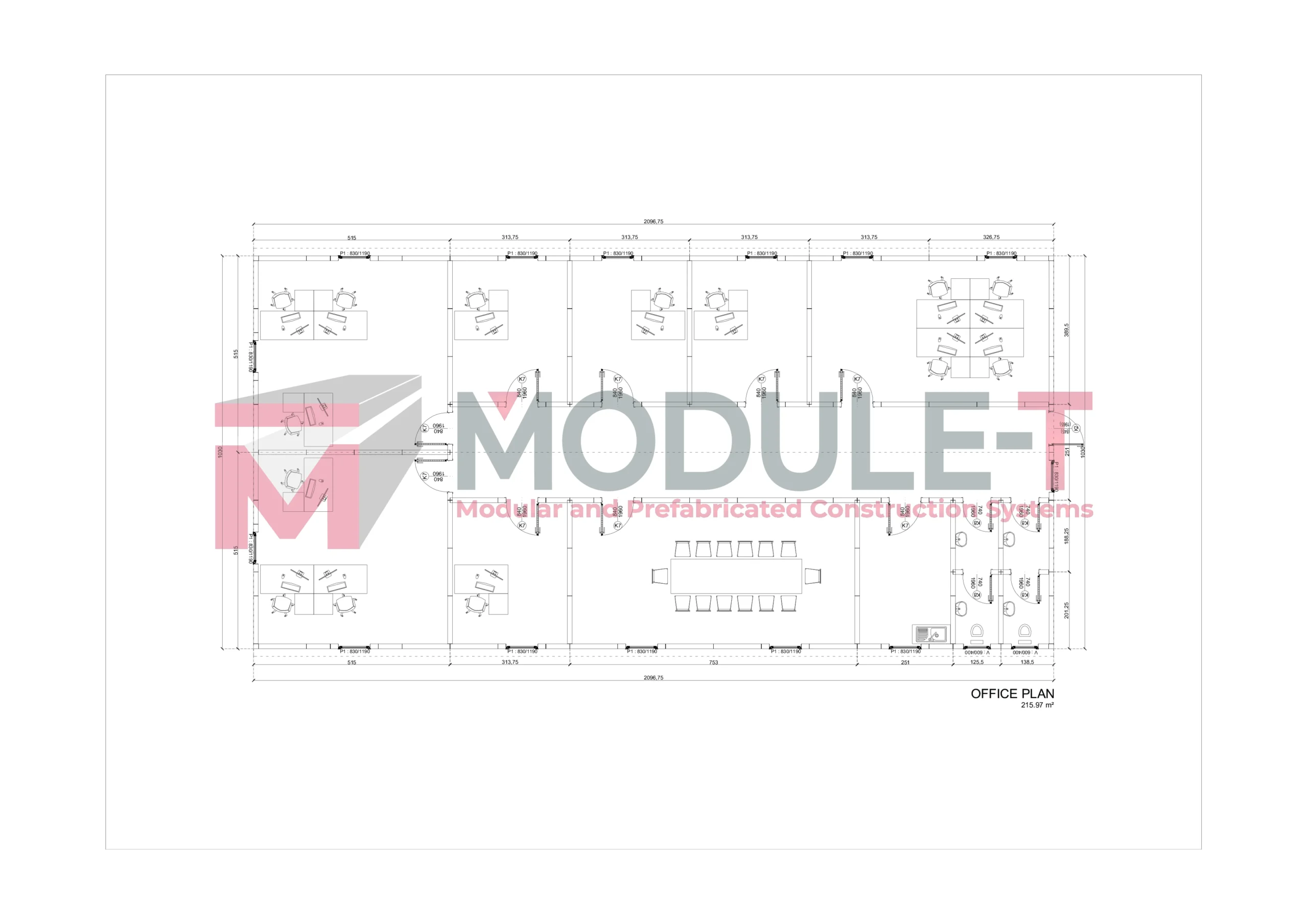
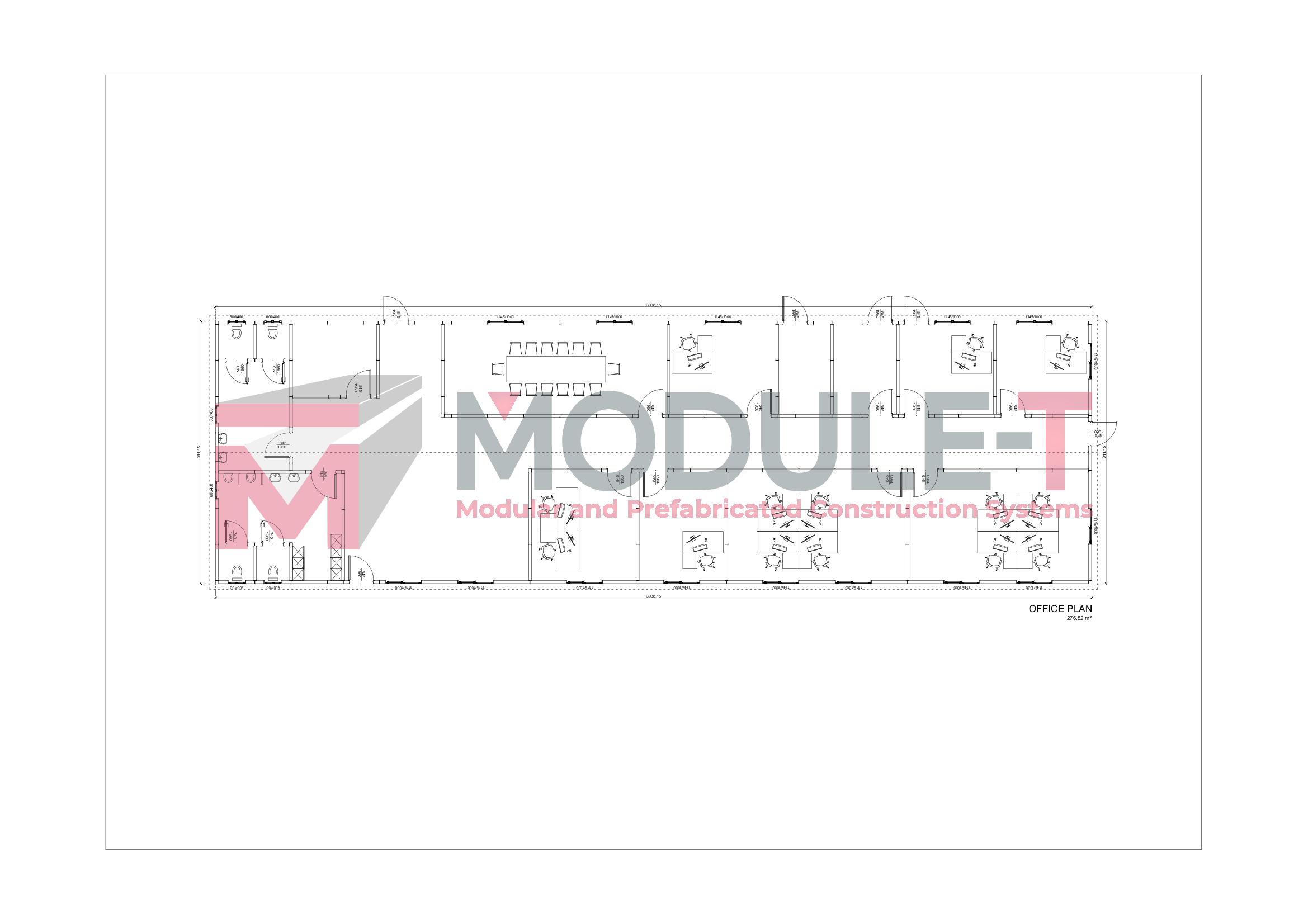
The following prefab office building configurations provide reference floor areas for different team sizes. Each plan can be adjusted according to room requirements, employee capacity and the approved technical specification.
The displayed floor areas are reference examples rather than fixed packages. Room functions, insulation, openings, interior surfaces and exterior finishes can be revised during technical planning.
A custom floor plan can support different departments and working arrangements within the same structure.
Possible areas include:
Interior height may range from approximately 250 cm to 300 cm, depending on the selected system and approved building specification.
For locations exposed to high wind, seismic activity or coastal conditions, the relevant environmental data should be provided before engineering begins. Structural calculations and connection details can then be prepared according to the standards defined for the destination.
After order confirmation, the technical documentation may include:
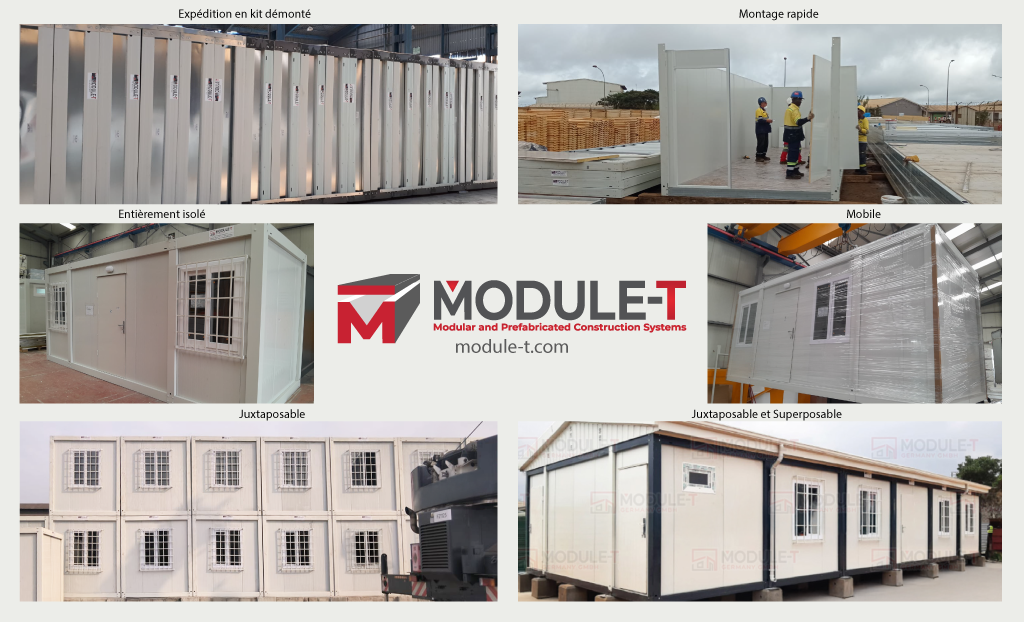
Pre-painted and pre-cut components are connected through a fully bolt-on system at the site. This reduces the need for complex structural fabrication during assembly. For a broader view of the construction category, explore Module-T’s prefabricated building solutions.
As an international prefabricated office manufacturer, Module-T supplies projects from its production facilities in Turkey and coordinates delivery to different markets.
Support can cover technical planning, production, shipment organization, assembly documentation and on-site technician assistance when included in the agreed scope.
The delivery stage is planned according to building dimensions, destination, transport route and site access. Components are organized to use available transport capacity efficiently and remain clearly identified for assembly.
Available support may include:
Unloading, storage, local site preparation and installation responsibilities should be confirmed before shipment. Defining these responsibilities early helps prevent delays after delivery.
To receive a quote quickly, please fill in the customer request form. Our sales representatives will contact you as soon as possible.