What Buildings Can Be Included in a Mining Camp?
The required infrastructure depends on workforce size, shift structure, project phase and the facilities already available nearby. A remote operation may therefore require several building types within the same development.
Common mining camp facilities include:
- site offices
- management and meeting rooms
- workforce accommodation and dormitories
- locker and changing rooms
- WC and shower facilities
- kitchens and dining areas
- recreation and social spaces
- first-aid or infirmary rooms
- security buildings
- storage and utility buildings
These facilities can be planned individually or combined as part of a larger mining camp based on workforce capacity and day-to-day operating needs.
Mining Site Offices and Management Areas
Administrative facilities need to support engineering, project management, supervision, procurement, and site coordination teams without taking up unnecessary space.
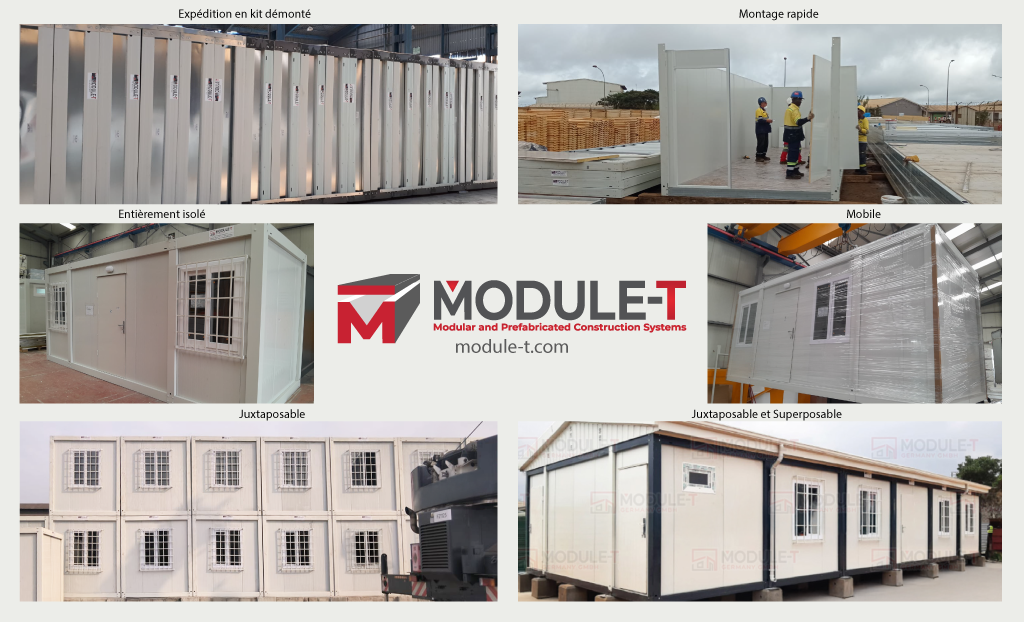
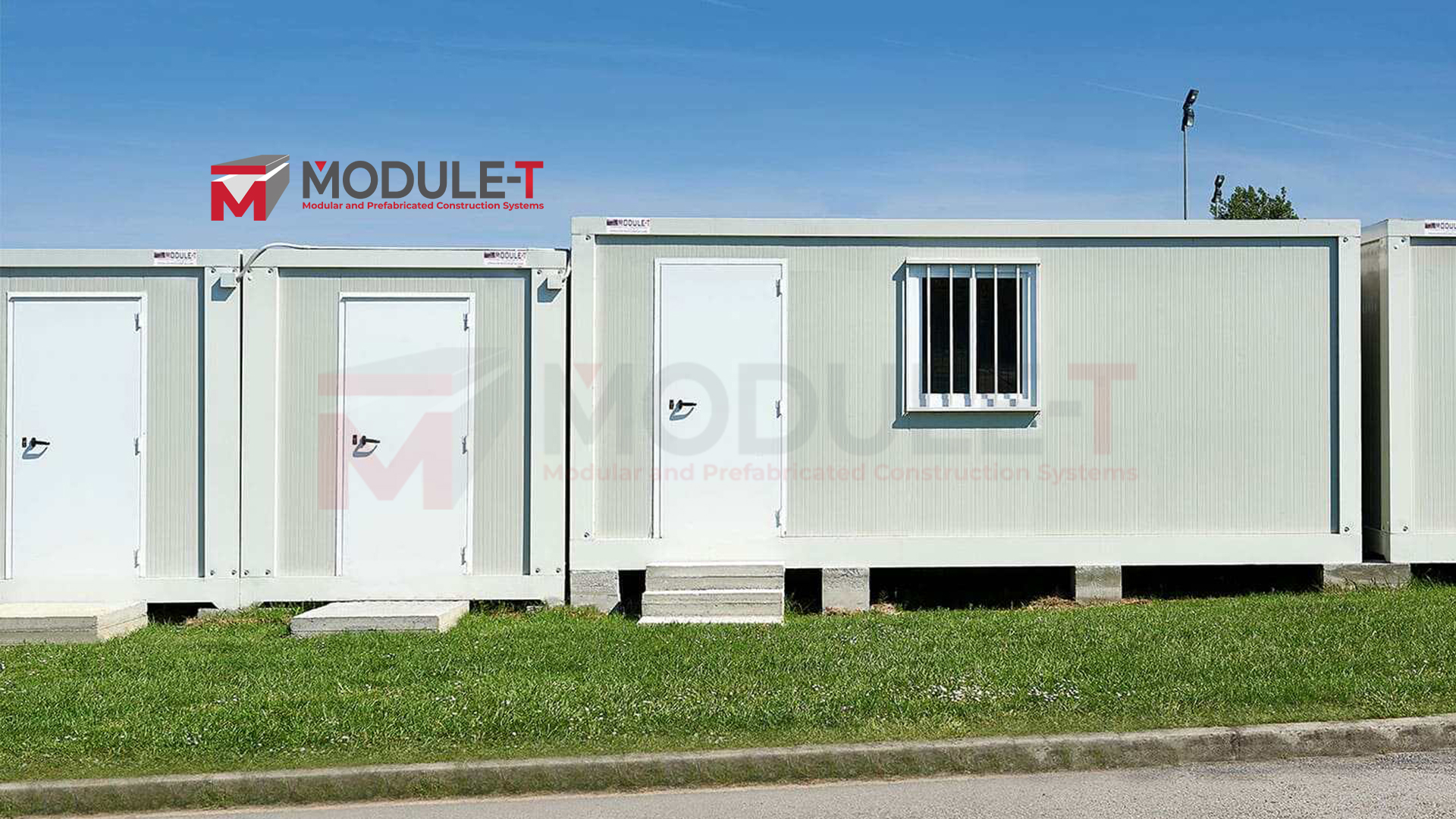
Mining site offices can include private offices, open working areas, meeting rooms, archives and shared facilities. Multiple units can also be connected where a larger administrative building is required.
For projects that need a dedicated office configuration, Module-T’s modular office buildings can be incorporated into the wider site plan.
Workforce Accommodation and Social Facilities
Accommodation becomes particularly important where daily transport between the site and established settlements is impractical.
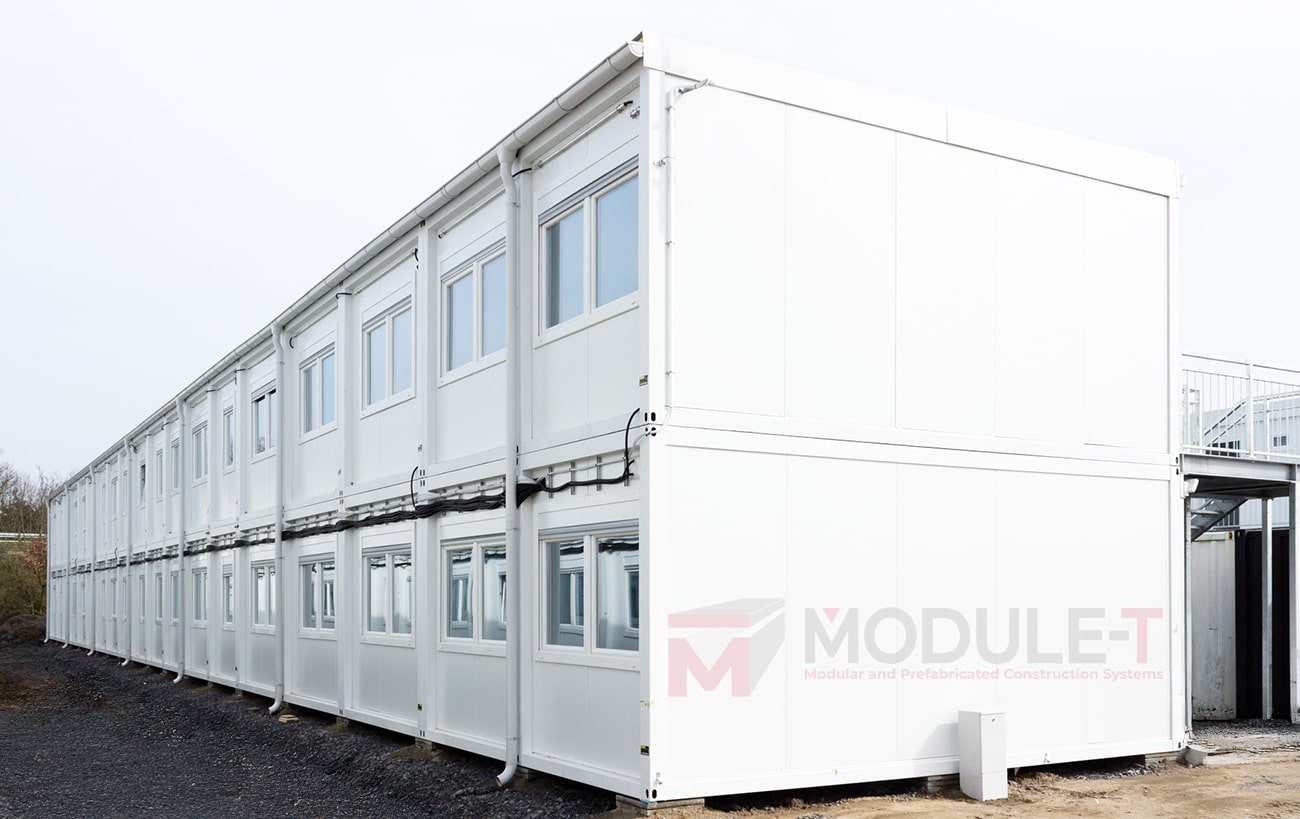
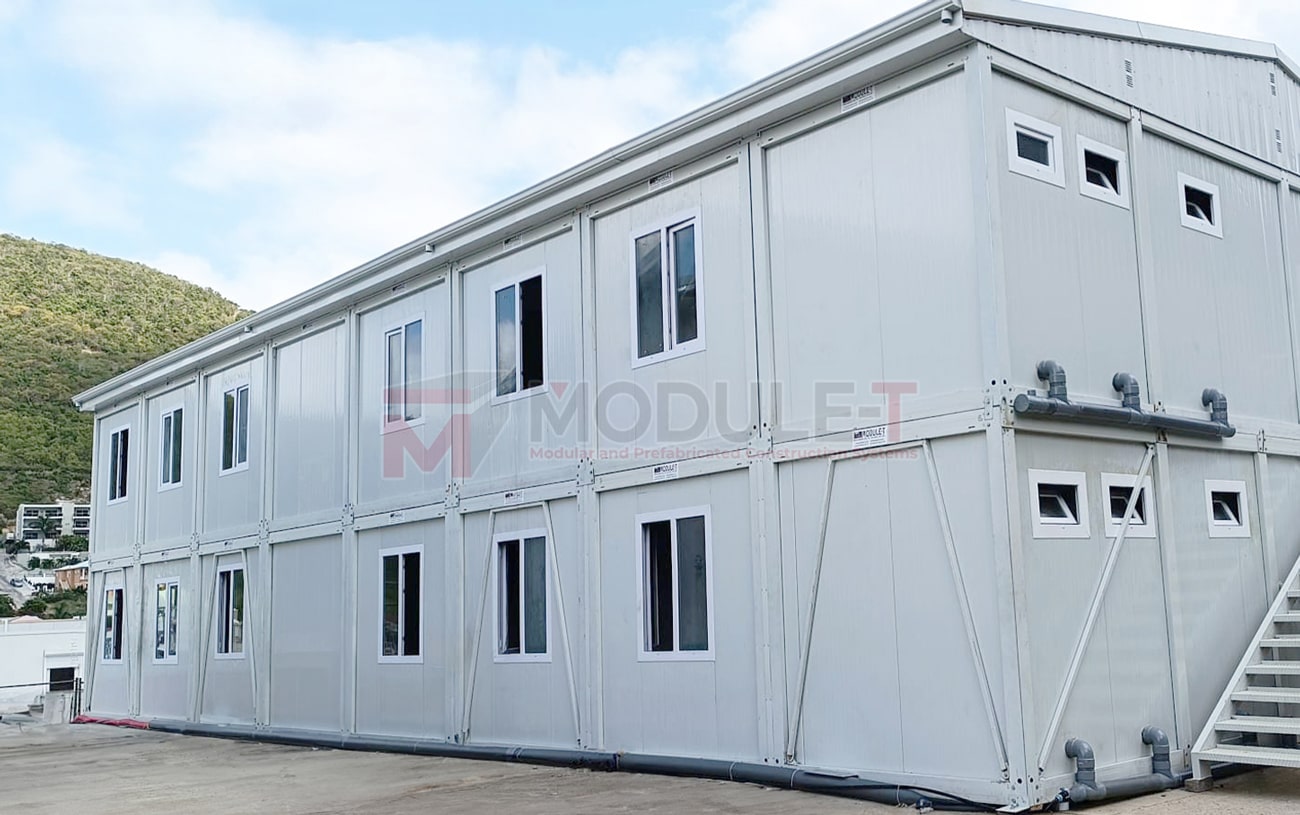
Room capacity, occupancy levels, and shared areas can be planned around workforce requirements. Dormitory or accommodation buildings may be supported by dining areas, kitchens, recreation rooms, and other communal spaces to create a more complete camp environment.
Module-T’s modular accommodation buildings can be configured for remote worksite applications and integrated with other facilities within the same development.
Sanitary, Changing, and Support Buildings
Sanitary and welfare facilities should be planned around workforce numbers and shift patterns rather than added after the main camp layout has been defined.
WC and shower areas, locker rooms and changing facilities can all be incorporated into the site plan. The number and location of these facilities can be determined by expected occupancy and daily operating needs.
Mining Project Reference: 336 m² Modular Complex in Mali
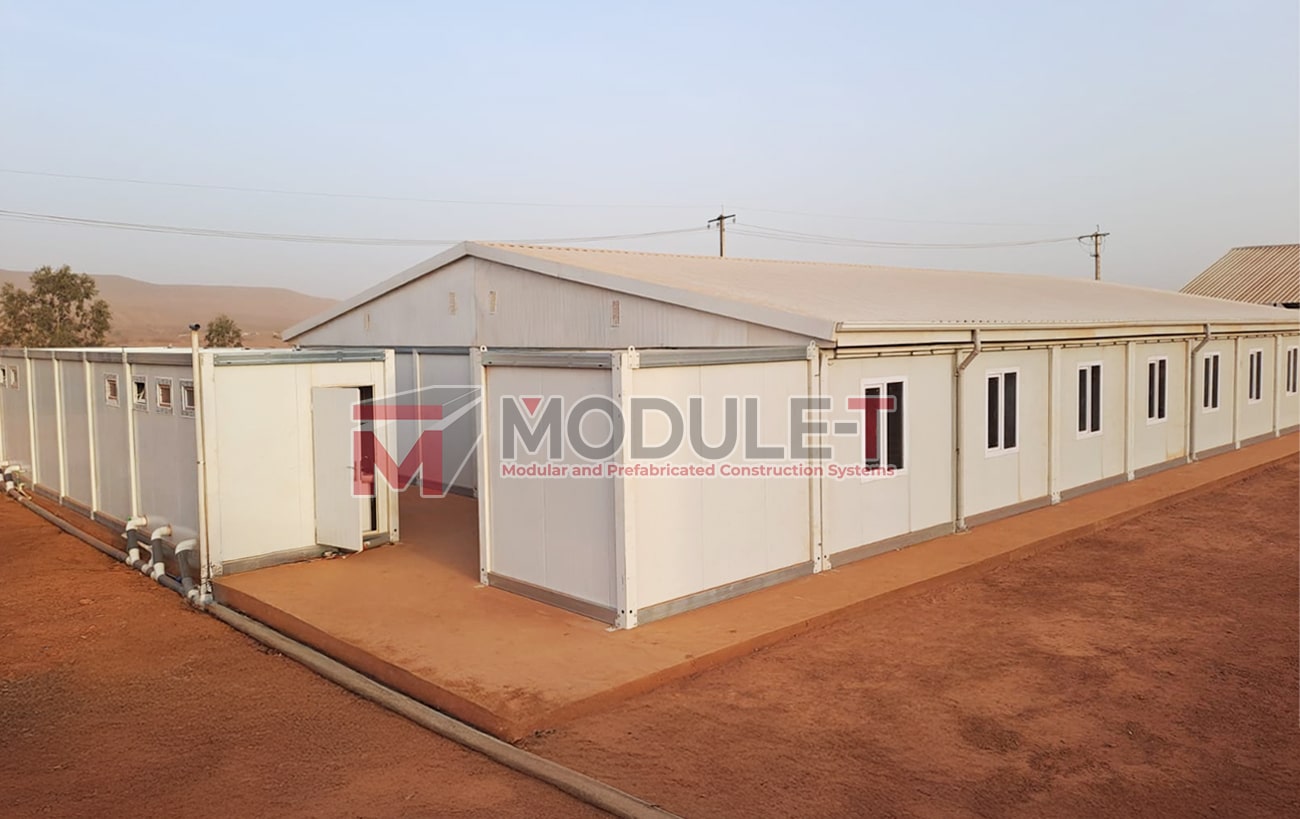
Module-T delivered a modular office, management and social complex for a mining operation in the Fekola area of Mali.
The single-storey complex covered 336 m² and was assembled from 16 modular units in several dimensions. The layout was developed to bring administrative and staff functions together within one facility.
The building used a galvanised steel frame, insulated sandwich panels, and PVC double-glazed windows. Electrical and lighting systems were installed on site as part of the project scope.
The published delivery and installation period was 35 days. This figure relates specifically to the Fekola project and should not be interpreted as a standard lead time for other developments.
View the Mali mining site project.
Building for Climate, Logistics, and Site Conditions
A project in West Africa does not necessarily require the same specification as a facility operating in a cold, humid, high-altitude, or seismic region.
Climate, structural loads, and site logistics should therefore be reviewed before the building specification is finalised.
Important inputs can include these:
- project country and site location
- temperature range and humidity
- required thermal insulation
- applicable wind design criteria
- applicable seismic design criteria, where required
- expected building occupancy
- electrical requirements
- water and sanitary infrastructure
- transport restrictions
- foundation design and site readiness
- fire and building regulations
- employer or EPC specifications
These factors influence the structural configuration, insulation, openings, internal systems and installation planning.
For remote worksites, resolving these requirements before production can also reduce the need for difficult or costly modifications after the buildings reach site.
Worker Accommodation, HSE, and Project Requirements
Remote workforce accommodation involves more than providing sleeping space. Depending on the project, engineering and procurement teams may also need to consider sanitation, drinking water, food preparation, waste management, fire safety, recreational areas and the separation of accommodation from operational activities.
For IFC-financed projects, IFC Performance Standard 2: Labor and Working Conditions forms part of the applicable environmental and social framework. Other mining projects may also reference IFC requirements through lender, client or EPC specifications.
The joint IFC and EBRD Workers’ Accommodation: Processes and Standards guidance also addresses temporary exploration camps, construction camps and permanent dormitories, including subjects such as sanitation, water supply, food preparation, fire safety and worker welfare.
Where these frameworks apply, their requirements should be reviewed alongside local legislation, client specifications, and relevant building codes.
Occupational safety, fire regulations, sanitary requirements and structural criteria may differ significantly between destinations. The applicable criteria should therefore be confirmed during planning before the final specification is approved.
What Determines Delivery Time and Project Cost?
There is no universal price or delivery period for a modular mining camp because the scope can range from a small administrative facility to a multi-building workforce complex.
The main factors influencing the commercial proposal include:
- total building area
- number of buildings and modules
- workforce capacity
- room configuration
- accommodation density
- insulation requirements
- electrical and sanitary installations
- doors and windows
- internal finishes
- structural design criteria
- project destination
- transportation requirements
- assembly scope
- foundation readiness and site access
A clear project brief allows these variables to be assessed before a commercial proposal is prepared.
The Mali reference demonstrates how a defined 336 m² scope can be delivered within a documented program, but schedules for other projects should be established separately.
What to Prepare Before Requesting a Mining Camp Quote
Providing clear information at the beginning helps engineering and commercial teams define the most appropriate configuration and avoid unnecessary revisions later.
Before requesting a proposal, it is useful to prepare:
- project location and destination country
- required building functions
- anticipated workforce capacity
- number of rooms or occupants
- available architectural drawings
- climate information
- structural design criteria
- electrical requirements
- sanitary requirements
- client or EPC technical specifications
- intended project duration
- required delivery program
- site access and transport information
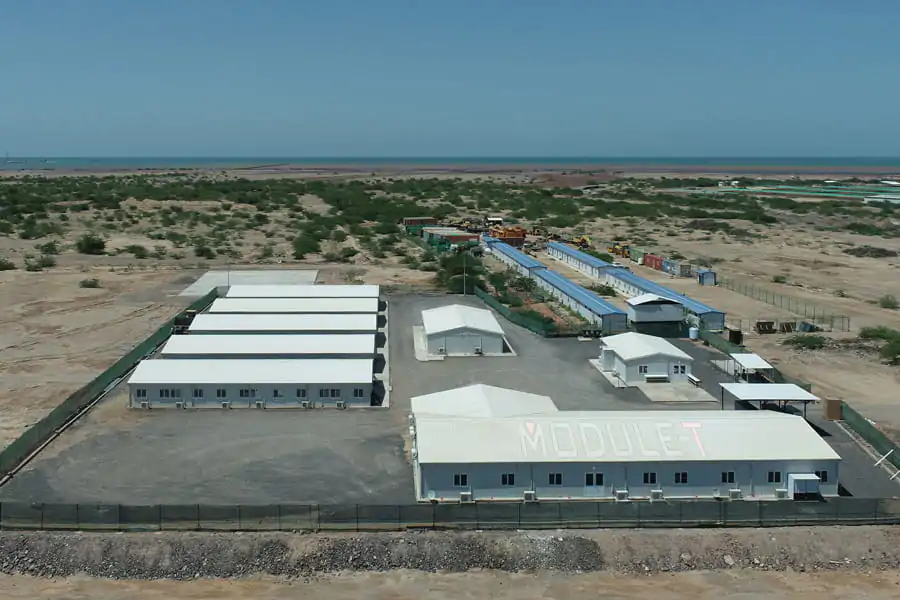
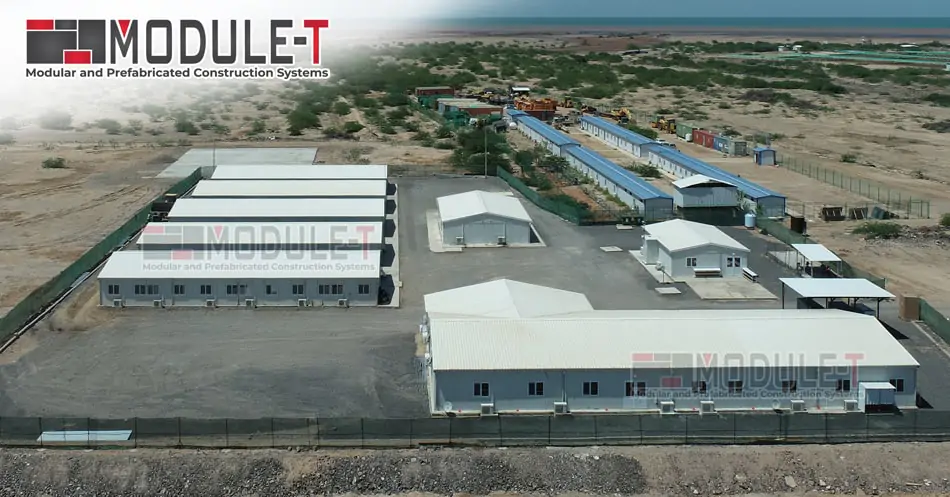
A complete site development may combine accommodation, offices, sanitary buildings, dining facilities and other support structures within one coordinated worksite plan.
For projects requiring several building functions within the same development, Module-T’s prefabricated worksite camps provide a relevant reference for integrated site infrastructure.
From Site Requirements to Project Proposal
The most suitable infrastructure is determined by how the operation will function rather than by selecting a standard building from a catalogue.
Module-T can manufacture individual facilities as well as coordinated worksite buildings for international projects. The final configuration is defined before production based on the required buildings, workforce needs, and project brief.
Share your project location, required building functions, workforce capacity, and available technical specifications with Module-T to receive a project-specific configuration and commercial proposal.
Request a Quote for Your Mining Project
FAQ About Modular Buildings for Mining Operations
What types of modular buildings are used at mining sites?
Mining sites can use modular facilities for offices, workforce accommodation, management areas, changing rooms, showers, WC facilities, dining spaces, kitchens, recreation rooms, security buildings and other support functions. The final combination depends on workforce numbers, operating requirements and the infrastructure already available near the project location.
Can mining camp buildings be designed for remote locations?
Yes. Mining camp buildings can be specified according to remote-site conditions including climate, transportation restrictions, thermal requirements, wind loads, seismic criteria and available infrastructure. These factors should be established during planning so that the structural system, insulation, layouts and technical installations reflect the actual destination.
How long does a modular mining project take to deliver?
The schedule depends on total area, number of buildings, technical specifications, production scope, destination and site installation requirements. As a verified reference, Module-T’s 336 m² complex in Mali consisted of 16 modular units and had a published delivery and installation period of 35 days. Other projects require their own programme.
Which standards and project requirements may apply to mining camp buildings?
Requirements vary by destination and project. Structural, fire, electrical, sanitary and occupational safety regulations may apply alongside local building codes and client or EPC specifications. For IFC-financed projects, IFC Performance Standard 2 also addresses labour and working conditions, while joint IFC/EBRD guidance provides recommendations for worker accommodation.
What affects the cost of a modular mining camp?
Project cost is influenced by total building area, workforce capacity, room configuration, insulation, structural requirements, electrical and sanitary systems, interior specifications, transport destination and assembly scope. A more accurate proposal can be prepared once the project location, required facilities and technical criteria have been defined.