10 Benefits of Modular Construction
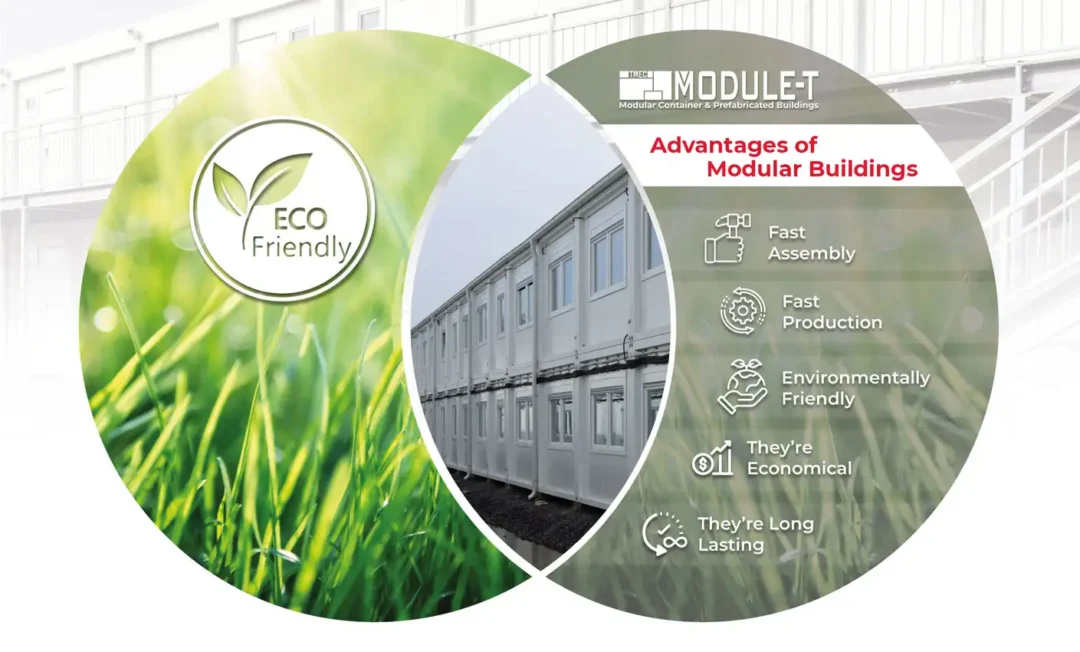
1- Construction Speed and Time Efficiency:Modular construction significantly reduces construction time compared to traditional methods. Modules are constructed off-site concurrently with on-site preparation, allowing projects to be completed in a shorter timeframe.
2- Cost-Effectiveness:Time savings translate into cost savings. Reduced labor costs, minimized material waste, and efficient resource utilization contribute to lower overall project costs.
3- Quality Control:Modules are built in a controlled factory environment, where quality can be closely monitored. This results in higher-quality structures with fewer defects and inconsistencies.
4- Flexibility and Customization:Modular construction allows for flexibility in design and customization. Modules can be tailored to meet specific project requirements, and modifications can be easily accommodated.
5- Reduced Site Disruption:Much of the construction work is done off-site, minimizing on-site disruption. This is particularly beneficial in urban areas or sensitive environments where noise, dust, and traffic congestion need to be minimized.
6- Sustainability:Modular construction often generates less waste and consumes fewer resources than traditional methods. Additionally, the controlled manufacturing process allows for more efficient use of materials, reducing environmental impact.
7- Improved Safety:Factory-controlled construction environments prioritize safety measures, resulting in fewer accidents and injuries compared to traditional construction sites.
8- Consistent Quality:Standardized manufacturing processes ensure consistent quality across modules, eliminating variability often associated with on-site construction.
9- Reduced Construction Delays:Factors such as adverse weather conditions have less impact on modular construction projects since much of the work is done indoors. This reduces the risk of project delays.
10- Scalability:Modular construction is highly scalable, making it suitable for projects of various sizes and complexities. Whether it’s a small residential building or a large commercial development, modular construction can be adapted to meet the project’s needs.