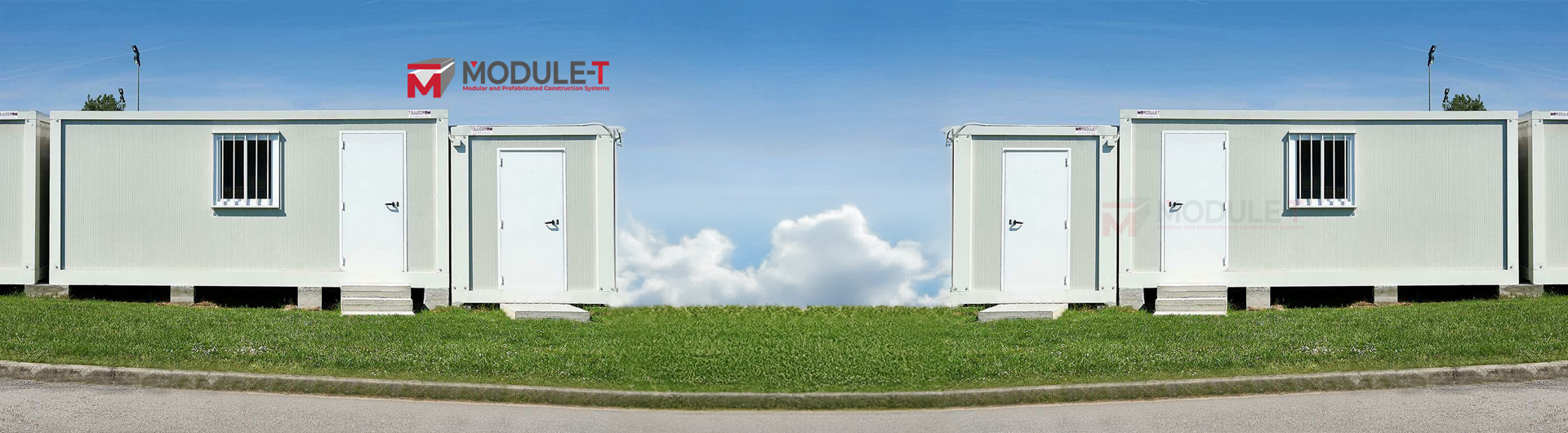
Planning Permission for Temporary Buildings
Temporary buildings offer a swift and cost-effective solution for organisations requiring additional space, whether for construction projects, educational facilities, storage, or other operational needs. Their inherent flexibility and speed of deployment make them incredibly attractive. However, a common point of confusion arises when considering their legal standing: do temporary buildings require planning permission? The answer, as with many planning matters, is nuanced and depends on a variety of factors. This article will demystify the process, exploring when planning permission is necessary, when it might be exempt, and how to navigate the application process for your temporary building project.
Temporary buildings planning permission requirements may vary depending on the project scope, location, and intended use.
Temporary buildings can include a wide range of solutions, from portable site offices and welfare cabins to modular containers, prefabricated buildings, and larger modular prefabricated buildings designed for temporary or semi-permanent use.
In addition, prefabricated buildings regulations must be considered to ensure compliance with safety and construction standards.
What Is a Temporary Building?
A temporary building is defined as a structure erected for a limited period, without the intention of it becoming a permanent fixture on a site. These structures are often prefabricated and can be installed rapidly, offering significant advantages in terms of speed, cost, and adaptability compared to traditional construction methods. They encompass a wide range of types, including portable cabins, site offices, modular classrooms, storage units, welfare facilities, and even more complex modular assemblies. The key characteristic is their design and intent for relatively short-term occupation or use, allowing for potential relocation, reconfiguration, or eventual removal. This distinction from a permanent building is crucial when assessing planning requirements.
In many sectors, temporary space solutions are no longer limited to simple cabins. Businesses increasingly use modular containers for site operations, prefabricated buildings for fast-track space expansion, and modular prefabricated buildings for larger projects requiring flexibility, speed, and efficient installation.
For modular solutions, modular buildings planning approval is often required before installation and use.
What Is Planning Permission?
Planning permission is a formal approval granted by a local planning authority (LPA) that allows for development or specific changes in land use. The fundamental purpose of planning permission is to regulate development to ensure it is appropriate for its location, considering factors such as visual impact, public safety, access, infrastructure, and environmental considerations. It’s a mechanism to control the construction process and ensure that development aligns with local and national planning policies, contributing to orderly development and the protection of the environment. For any building operations or significant changes to land use, understanding and obtaining the necessary permissions is paramount.
In many cases, planning permission for portable buildings and planning permission for porta cabins are subject to similar local regulations and approval processes.
Why Planning Permission Exists
The system of planning permission is designed to manage the impact of development on the environment and communities. Its existence stems from the need to balance development with the protection of amenities, safety, and the character of an area. Without planning controls, unregulated construction could lead to issues such as:
- Visual Blight: Unsightly structures impacting the aesthetic appeal of an area, particularly in conservation areas or Areas of Outstanding Natural Beauty.
- Overburdened Infrastructure: Increased demand on utilities, drainage, and transport networks without adequate capacity.
- Safety Hazards: Structures that compromise fire safety, emergency access, or pedestrian/vehicular circulation.
- Amenity Issues: Developments that cause unacceptable noise, light pollution, or loss of privacy to neighbouring properties.
- Ecological Damage: Impact on sensitive habitats or protected species, potentially requiring an environmental impact assessment.
The Town and Country Planning Act 1990 forms the bedrock of this system in England and Wales, establishing the framework for how land can be developed and how development proposals are assessed.
Who Grants Planning Permission?
In the UK, planning permission is typically granted by the local planning authority (LPA), which is usually a district council, borough council, or a unitary authority. For certain types of development, or in specific designated areas, other bodies like county councils or government departments may also have a role. The local authority acts as the primary point of contact for most planning applications. They are responsible for assessing proposals against local development plans, national policies, and considering feedback from the public and other consultees. Their decision-making process often involves detailed reviews of submitted plans and may include site visits.
Do Temporary Buildings Need Planning Permission?
The question of whether temporary buildings require planning permission is multifaceted. While the term “temporary” suggests a lesser impact, it does not automatically exempt a structure from planning control. The need for permission hinges on several key factors, including the duration the building will remain on site, its intended use, its size and scale, its placement, and whether it constitutes a “material change of use” of the land.
Many temporary structures can be erected under permitted development rights, which are specific allowances granted by national legislation, primarily the General Permitted Development Order (GDPO). These rights allow for certain minor developments without the need for a formal planning application. However, these rights are not unconditional and are subject to limitations and exclusions, particularly in designated areas or if specific criteria are exceeded. If a temporary building does not meet the criteria for permitted development, or if those rights have been removed by an article 4 direction, then a full planning application will be necessary. It is crucial to understand these distinctions to avoid potential enforcement notice actions.
When Planning Permission Is Required?
While permitted development rights provide a streamlined route for many temporary structures, there are numerous scenarios where a formal planning application will be necessary. Understanding these triggers is vital to ensure compliance and avoid retrospective issues.
- When the Building Stays on Site for an Extended Period
The definition of “temporary” can be subjective, but planning authorities often consider the intended duration of occupation. A structure intended to remain on a site for an extended period, even if it is technically relocatable, may be viewed as development that requires full assessment. For instance, a temporary portable classroom used for over a year, or a modular office unit serving as a primary business hub for several years, might fall outside the scope of short-term exemptions. The Town and Country Planning Act 1990 distinguishes between temporary use and permanent development, and the longer a structure stays, the more likely it is to be considered development requiring consent. Some planning authorities may specify time limits beyond which a planning permission is automatically required, often exceeding the 28-day rule typically associated with temporary uses.
- When the Building Changes the Use of the Land
A significant trigger for requiring planning permission is when a temporary building facilitates or constitutes a “material change of use” of the land. Even if the structure itself is temporary, if its use results in a change from one use class to another, planning permission is typically needed. The Use Classes Order (currently the Town and Country Planning (Use Classes) Order 1987, as amended) categorizes different types of land and building use. For example:
- Placing a storage space unit on land previously used only for agricultural building purposes might constitute a material change of use.
- Using a site primarily for commercial purposes like a temporary sales office (falling under Class E – Commercial, Business and Service uses) when it was previously residential (Class C3 – Dwellinghouses) would require permission.
- A temporary facility for industrial processes (Class B2 – General Industrial) on land not zoned for such uses would necessitate a planning application.
- Similarly, using a temporary structure for holiday lets (Class C1 – Hotels) or as storage and distribution centres (Class B8) on land with a different primary use would require consent.
The local planning authority will assess whether the proposed use represents a significant departure from the established use of the land.
- When the Structure Is Large or Highly Visible
The size, scale, and visual impact of a temporary structure are critical factors. While small, unobtrusive units might fall within permitted development, larger or more prominent buildings are more likely to require a formal planning application. Authorities consider how the building might affect the visual amenity of the area, especially if it is located in a prominent position or visible from public vantage points. This includes assessing its height, footprint, and the overall site area it occupies. For example, a large modular complex for a construction project or a substantial temporary exhibition space would likely need to undergo a more rigorous assessment than a small security hut. Elevation plans and site plans are essential to demonstrate the scale and integration of the structure.
- When the Site Is in a Sensitive or Protected Area
The location of the temporary building significantly influences planning requirements. Sites within designated areas often have stricter controls to preserve their character and environmental value. These include:
- Conservation Areas: Areas of special architectural or historic interest where the appearance and setting of buildings are highly valued.
- Areas of Outstanding Natural Beauty (AONBs): Protected landscapes where development is carefully controlled to preserve their natural beauty.
- National Parks and the Broads: Similar to AONBs, these areas have stringent planning policies.
- World Heritage Sites: Areas of outstanding universal value.
- Sites of Special Scientific Interest (SSSIs) and Habitat sites: Areas of ecological importance.
In such sensitive locations, even seemingly minor temporary structures may require a planning application, and there may be limitations on size, design, materials, and duration. An environmental impact assessment might also be required if the development could have significant environmental effects.
- When Foundations, Utilities, or Permanent Works Are Involved
Although the building itself may be classified as temporary, the associated works required for its installation can trigger the need for planning permission. If the installation involves significant groundworks, the laying of foundations, extensive utility connections (for water, electricity, drainage, or telecommunications), or the creation of permanent access roads or hardstanding, these building operations may constitute development in their own right. For instance, connecting a temporary portable classroom or a modular office complex to mains services requires infrastructure that a local authority will want to assess. Drainage considerations are particularly important, as inadequate systems can lead to pollution or public health issues.
- When Public Access or Commercial Use Is Intended
The intended use of a temporary building plays a crucial role in the planning assessment. If the structure is to be used by the general public, customers, students, or patients, rather than solely for internal staff purposes related to an existing operation, it will generally attract more scrutiny. This is because public-facing facilities have implications for accessibility, safety (including fire safety and egress), traffic management, parking provision, and sanitation. For example, a temporary sales office, a clinic, a public exhibition space, or a reception area would likely require more detailed consideration and potentially a full planning application than a simple storage unit for on-site materials. The site boundary and its relationship with public areas will be important considerations.
This flowchart outlines the key questions to determine if your temporary building project is likely to require planning permission.
- When Local Regulations Specifically Require It
Beyond national legislation like the General Permitted Development Order 2015 (GDPO 2015), individual local authorities can implement their own specific policies and requirements. These might include stricter thresholds for what constitutes development, additional documentation required for applications, or specific restrictions on types of temporary buildings in certain zones. An article 4 direction is a powerful tool that LPAs can use to remove specific permitted development rights in a particular area, meaning that developments that would normally be permitted now require a full planning application. Therefore, it is essential to consult with the relevant local planning authority or seek expert advice from planning consultants, such as Mosaic Town Planning, to understand the precise local requirements before proceeding.
When Planning Permission Is Not Required: Permitted Development Rights
Fortunately, for many temporary structures, the process is simplified through permitted development rights. These rights, granted under the Town and Country Planning Act 1990 and detailed within the General Permitted Development Order (GDPO 2015), allow for certain types of development to proceed without the need for a formal planning application, provided specific conditions and limitations are met.
For temporary buildings, the most relevant provisions are often found in Part 4 of Schedule 2 of the GDPO. A common scenario involves Class A development, which relates to the temporary use of land for any purpose for not more than 28 days in total in any calendar year, and the erection or construction of temporary buildings or other operations on the land during that period. However, this 28-day rule is subject to many exceptions and limitations.
Key criteria for permitted development for temporary structures often include:
- Duration: The building must genuinely be temporary. For uses exceeding 28 days, specific conditions apply, and often a formal permission is needed.
- Size and Height: There are usually limits on the building floor space and the maximum height of the structure.
- Proximity to Boundaries: Restrictions often apply regarding how close the temporary building can be to the site boundary or to existing dwellings. A common rule is that temporary buildings cannot be closer than 5 metres to the site boundary in certain circumstances.
- Impact on Neighbours: The development should not unreasonably impact the amenity of neighbouring properties.
- Site Area: The overall development within the site area is also considered.
- Exclusions: Permitted development rights are often restricted or entirely removed in designated areas like conservation areas, National Parks, Areas of Outstanding Natural Beauty, and around listed buildings or scheduled monuments. An article 4 direction can also remove these rights.
It is also possible to apply for a LAWUL DEVELOPMENT CERTIFICATION (or Lawful Development Certificate) from the local planning authority. This is not planning permission itself but a formal confirmation that the proposed development is lawful and does not require full planning permission because it falls within permitted development rights. This provides certainty and can be beneficial, particularly if you plan to sell the property or obtain a mortgage.
The Planning Application Process for Temporary Buildings
When your temporary building project does not qualify for permitted development rights, or if you want certainty that it complies with planning rules, you will need to submit a planning application. The application process can seem daunting, but breaking it down into steps makes it manageable.
- Initial Consultation & Site Visit: Begin with an initial site visit by a qualified professional (e.g., from Mosaic Town Planning). This allows for an assessment of the site’s context, any constraints (e.g., mining operations, existing utilities, proximity to adjoining land), and potential planning challenges. Understanding the site area, site boundary, and surrounding environment is crucial.
- Gathering Information and Documentation: A robust planning application requires comprehensive documentation. This typically includes:
-
- Site Plan: Showing the proposed location of the temporary building within the overall site area.
-
- Elevation Plans: Detailed drawings of the building’s exterior from different viewpoints.
-
- CAD Drawings: Technical drawings that provide precise specifications.
-
- Production of a Planning Statement: A document that explains the proposal, justifies the need for the temporary building, addresses relevant planning policies, and explains how the proposal meets planning requirements.
-
- Supporting Reports: Depending on the nature and location of the project, this may include reports on drainage considerations, environmental impact assessment (if triggered by the Environmental Impact Assessment Regulations 2017), noise assessments, or transport assessments.
- Submitting the Application: The primary route for submitting applications in the UK is through the Planning Portal. This online platform allows you to upload all necessary documents and pay the required application fees. The Planning Portal fee calculator can help you determine the correct fee based on the type and scale of the development.
- Local Authority Assessment: Once submitted, the local planning authority will review the application. This usually involves a site inspection, consultation with relevant departments (e.g., highways, environment), and potentially notification to neighbours and the public.
- Determination: The LPA will then make a decision, either granting permission (often with conditions), refusing permission, or requesting further information. The application process timeline can vary but is typically several weeks to a few months.
For certain developments that fall between full planning permission and minor works, the concept of prior approval may apply. This is a streamlined process where the LPA only needs to consider specific aspects of the development (e.g., impact on highways or flood risk) before granting permission, rather than a full assessment of all planning considerations.
Special Cases and Considerations
Navigating the planning landscape for temporary structures involves understanding various special cases and specific regulations.
- Agricultural Buildings: Agricultural buildings often benefit from specific permitted development rights under the GDPO 2015 (e.g., Class A, Part 6), allowing for the erection or reconstruction of farm buildings provided they meet size, distance, and other criteria. However, these rights are tied to the agricultural use of the land.
- Portable Buildings and Temporary Classrooms: Portable buildings like temporary portable classrooms are common in the education sector. While often eligible for permitted development if they meet the criteria, their scale and duration of use in school settings may sometimes necessitate a full planning application, especially if they are part of a larger construction project or expansion.
- Storage Space: Temporary units for storage space are frequently used in commercial and industrial settings. Their planning status will depend on their size, duration, and whether they represent a material change of use.
- Construction Sites: Temporary structures are integral to any construction site, providing offices, welfare facilities, and storage. These are usually permitted under specific rules associated with the main development, often with a time limit linked to the completion of the construction project.
- Restored Land: If a building site has undergone restoration (e.g., after mining operations or landfill), the planning implications for temporary structures on this restored land will depend on the long-term planning status of the site and any conditions attached to the restoration approval.
- Building Regulations: It is crucial to distinguish between planning permission and building regulations. Even if planning permission is not required, or if granted under permitted development, a temporary building may still need to comply with building regulations to ensure structural safety, fire safety, energy efficiency, and accessibility. For instance, microgeneration equipment installed on a temporary structure would still need to meet safety standards.
Navigating Challenges and Alternatives
Even with careful planning, challenges can arise. One common issue is the need for retrospective planning permission or retrospective planning. This occurs when a temporary building is erected without first obtaining the necessary consent. While it is possible to apply for retrospective planning permission, it is a risky strategy. The local planning authority may refuse the retrospective application, leading to an enforcement notice requiring the structure to be removed. This can result in wasted costs and delays.
If an enforcement notice is served, you may have grounds to appeal, but this is a complex legal process. The land owner is ultimately responsible for ensuring compliance. The local authority has powers to take action against unauthorised development, which can include fines and legal proceedings.
For any complex project or where there is uncertainty, seeking pre-application advice from the local planning authority or engaging with a professional planning consultant is highly recommended. This proactive approach can help identify potential issues early, save time and money, and significantly increase the chances of a successful outcome.
Final Thoughts
The deployment of temporary buildings offers undeniable advantages in terms of speed, flexibility, and cost-effectiveness. However, it is imperative to approach their installation with a clear understanding of the planning permission landscape. While permitted development rights can streamline the process for many structures, they are not a universal solution and come with strict conditions. The duration of occupation, the intended use, the scale of the building, its location, and any associated building operations all play a critical role in determining whether a formal planning application is required.
Ignoring planning requirements can lead to significant issues, including the necessity for retrospective planning permission, potential enforcement notices, and the costly requirement to dismantle the structure. For any project involving temporary structures, whether it’s a small portable cabin, a temporary portable classroom, or a larger modular facility, the prudent first step is to consult with the relevant local planning authority or seek professional advice from experienced planning consultants. Specialists like Mosaic Town Planning can provide invaluable guidance on navigating the complexities of the Town and Country Planning Act 1990, the General Permitted Development Order 2015, and specific local authority policies, ensuring your temporary building project is compliant, efficient, and successful. Proactive planning, thorough documentation, and clear communication with the authorities are the cornerstones of achieving planning consent for your temporary building needs.
Understanding portable cabin planning rules is essential to avoid delays and ensure a smooth approval process.